


India vs Pakistan Asia Cup 2025: Full Match Report, Scorecard & Analysis
India beat Pakistan by 7 wickets in the Asia Cup 2025 Group A clash at Dubai. Read the full match report with verified scorecards, player grades, key turning points, tactical analysis and fan reactions.
India vs Pakistan — Asia Cup 2025 (Group A, T20)
Date: 14 September 2025
Venue: Dubai International Cricket Stadium, Dubai
Result: India beat Pakistan by 7 wickets (India 131/3 in 15.5 overs chasing Pakistan 127/9)
Player of the Match: Kuldeep Yadav (India)
Introduction — a rivalry that stops the world
There are cricket matches, and then there are India-Pakistan matches. Whatever the format, venue or stakes, when these two teams meet the event becomes as much a cultural moment as a sporting contest. The Asia Cup 2025 Group A clash at the Dubai International Cricket Stadium on 14 September was exactly that: global attention, electric atmospherics and a contest that delivered a compact, high-intensity T20 spectacle.
Dubai’s stands were a canvas of blue and green — flags, drums and painted faces — and the noise rose long before the first ball. For a few hours the political headlines and the calendar dates were secondary; cricket took over. On the night, India’s combination of probing spin and explosive batting proved decisive. Pakistan, despite flashes of fight and a late cameo from Shaheen Shah Afridi, could not put enough runs on the board. India chased the modest target with time to spare, winning by seven wickets, Kuldeep Yadav’s spin the decisive factor.
This long-form match report reconstructs the contest: ball-by-ball turning points, full verified scorecards, tactical analysis, player grades, statistical context and the fan reaction that followed both inside and outside the stadium.
Match context and build-up
Asia Cup group stages are short, brutal slogs. One bad game can change a team’s path; one dominant win can make that team a favorite. Both India and Pakistan came into this fixture with strong interest in setting the tone for their campaigns.
Pakistan had selected a squad that blended seam pace with some spin options, and captain Salman Ali Agha wanted his side to be proactive with the bat. The thinking was straightforward: put runs on the board, defend them with the new ball and the seaming conditions at Dubai, then rely on the pace battery at the end.
India’s approach was more about balance. Their spin resources — most notably Kuldeep Yadav and Axar Patel — were expected to be effective on the UAE surfaces, and their batting contained several hitters able to change the tempo in a matter of overs. The toss and decision to bat or bowl would matter, but both captains knew that execution across the 20 overs would define the evening.
Toss and team news
Pakistan won the toss and elected to bat first. The captain’s logic was clear: in a match where scoreboard pressure matters, posting a competitive total would force India to play with intensity under pressure and make use of the early night conditions. Pakistan’s XI included their experienced pacers and a batting order designed to move the scoring rate quickly if possible.
India fielded a strong playing XI: a mixture of attacking options at the top (Abhishek Sharma, Shubman Gill), a steady middle order (Suryakumar Yadav) and variety in the bowling attack (Jasprit Bumrah’s accuracy, Varun / Kuldeep spin options). The stage was set.
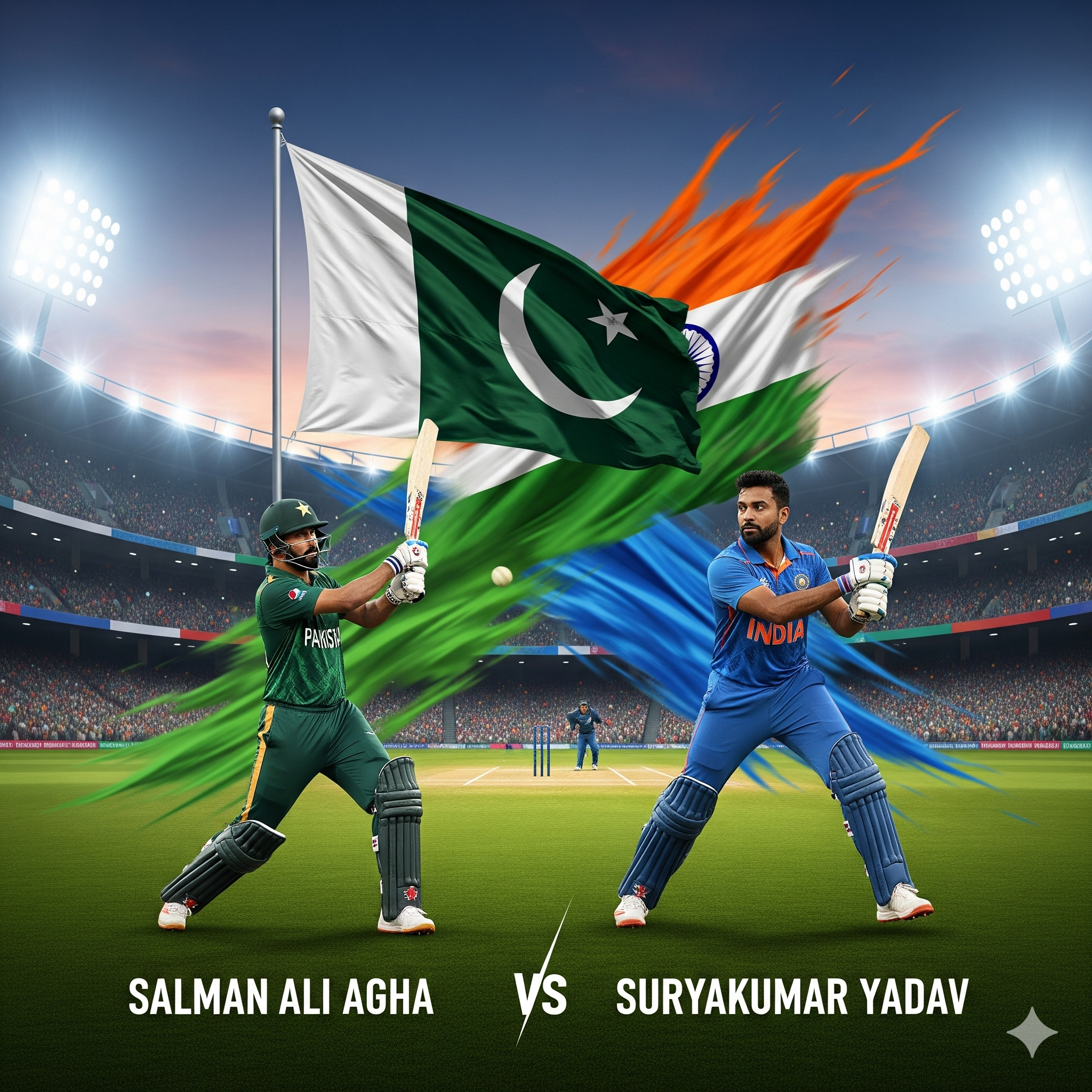
First innings — Pakistan 127 for 9 (20 overs)
Pakistan’s batting became the story of the evening because it never quite settled. They lost key wickets at regular intervals; small stands came, but no partnership lasted long enough to set the kind of platform that forces a T20 chase into true jeopardy.
Innings narrative — over by over
Powerplay (Overs 1–6): Pakistan’s start was shaky. Saim Ayub was dismissed almost immediately and Pakistan’s top order could not build the kind of early foundation they needed. By the end of the powerplay Pakistan had lost multiple wickets and were behind a healthy run rate required on most UAE surfaces for respectability.
Middle overs (Overs 7–15): Kuldeep Yadav emerged as the central figure in this phase. His spin and variations choked the scoring opportunities and claimed vital wickets. Pakistan’s middle order attempted to rebuild — Sahibzada Farhan offered the only real sustained resistance with a measured 40 — but wickets fell either side of his presence, preventing any acceleration.
Death overs (Overs 16–20): The final overs offered a brief late jolt. Shaheen Shah Afridi, the captain and premier fast bowler, produced a late cameo — quick, aggressive and powerful hitting — and finished unbeaten on 33. That innings raised Pakistan’s total out of the distinctly inadequate into the realm of slightly competitive, but the late flourish came too late to change the match’s balance.
Pakistan batting scorecard (official)
| Batsman | R | B | 4s | 6s | SR | Dismissal |
|---|---|---|---|---|---|---|
| Saim Ayub | 0 | 1 | 0 | 0 | 0.00 | c Bumrah b Hardik Pandya |
| Sahibzada Farhan | 40 | 44 | 1 | 3 | 90.91 | c Hardik Pandya b Kuldeep Yadav |
| Mohammad Haris (wk) | 3 | 5 | 0 | 0 | 60.00 | c Hardik Pandya b Jasprit Bumrah |
| Fakhar Zaman | 17 | 15 | 3 | 0 | 113.33 | c Tilak Varma b Axar Patel |
| Salman Ali Agha (c) | 3 | 12 | 0 | 0 | 25.00 | c Abhishek Sharma b Axar Patel |
| Hasan Nawaz | 5 | 7 | 0 | 0 | 71.43 | c Axar Patel b Kuldeep Yadav |
| Mohammad Nawaz | 0 | 1 | 0 | 0 | 0.00 | lbw b Kuldeep Yadav |
| Faheem Ashraf | 11 | 14 | 1 | 0 | 78.57 | lbw b Varun Chakravarthy |
| Shaheen Shah Afridi | 33* | 15 | 3 | 2 | 220.00 | not out |
| Sufiyan Muqeem | 10 | 6 | 2 | 0 | 166.67 | b Jasprit Bumrah |
| Abrar Ahmed | 0* | 0 | 0 | 0 | 0.00 | not out |
Extras: 5 (w 4, nb 1)
Total: 127/9 (20.0 overs)
(Fall of wickets: 1–1 (Ayub, 0.1), 6–2 (Haris, 1.2), 45–3 (Fakhar, 7.4), 49–4 (Salman Agha, 9.6), 64–5 (Hasan Nawaz, 12.4), 64–6 (Mohammad Nawaz, 12.5), 83–7 (Farhan, 16.1), 97–8 (Faheem Ashraf, 17.4), 111–9 (Sufiyan, 18.6).)
India bowling (figures and impact)
| Bowler | O | M | R | W | Econ |
|---|---|---|---|---|---|
| Jasprit Bumrah | 4.0 | 0 | 28 | 2 | 7.00 |
| Varun Chakravarthy | 4.0 | 0 | 24 | 1 | 6.00 |
| Kuldeep Yadav | 4.0 | 0 | 22 | 4 | 5.50 |
| Axar Patel | 4.0 | 0 | 18 | 2 | 4.50 |
| Hardik Pandya | 3.0 | 0 | 34 | 1 | 11.33 |
| Abhishek Sharma | 1.0 | 0 | 5 | 0 | 5.00 |
Key points: Kuldeep’s four wickets choked the middle order. Axar’s containment and breakthrough work complemented Kuldeep perfectly. Bumrah and Varun kept the pace options tight; Hardik’s over leaked but his earlier contributions were valuable. The Indian attack as a whole controlled tempo and applied pressure at crucial phases.
Second innings — India 131 for 3 (15.5 overs) — chase completed
For India, the chase was concise, clinical and efficient. The equation was modest — 128 to win — but in T20 cricket nothing can be taken for granted, particularly against a Pakistan attack that had bite. India, however, made light work of the target.
Chase narrative and key phases
Explosive start: Abhishek Sharma exploded with a whirlwind 31 off 13 balls, taking the sting out of the chase immediately. When a batsman can score that quickly at the top in a low-target chase, it gives the middle order enormous freedom and puts the pressure back on the bowling side.
Middle consolidation: Tilak Varma and Suryakumar Yadav took control once the initial momentum was established. Varma’s 31 kept the scoring rate steady, while SKY (Suryakumar) played the anchoring role and the finisher’s role at various points, showing both calculated rotation and hitting when needed.
Finish: India wrapped up the innings in 15.5 overs — well ahead of the required 20 overs. The victory margin of seven wickets was emphatic relative to the margin of runs, and it underlined how India’s batting depth and the early blitz made the small target effectively unthreatening.
India batting scorecard (official)
| Batsman | R | B | 4s | 6s | SR | Dismissal |
|---|---|---|---|---|---|---|
| Abhishek Sharma | 31 | 13 | 4 | 2 | 238.46 | c Faheem Ashraf b Saim Ayub |
| Shubman Gill | 10 | 7 | 2 | 0 | 142.86 | st Mohammad Haris b Saim Ayub |
| Suryakumar Yadav (c) | 47* | 37 | 5 | 1 | 127.03 | not out |
| Tilak Varma | 31 | 31 | 2 | 1 | 100.00 | b Saim Ayub |
| Shivam Dube | 10* | 7 | 0 | 1 | 142.86 | not out |
| Extras | 2 (lb 1, w 1) | |||||
| Total | 131/3 (15.5 overs) |
(Fall of wickets: 1–41 (Gill, 2.5), 2–46 (Abhishek Sharma, 3.2), 3–60 (Tilak Varma, 7.3).)
Pakistan bowling figures (India chase)
| Bowler | O | M | R | W | Econ |
|---|---|---|---|---|---|
| Saim Ayub | 4.0 | 0 | 35 | 3 | 8.75 |
| Abrar Ahmed | 4.0 | 0 | 16 | 0 | 4.00 |
| Mohammad Nawaz | 3.0 | 0 | 27 | 0 | 9.00 |
| Sufiyan Muqeem | 2.5 | 0 | 29 | 0 | 10.29 |
| Shaheen Shah Afridi | 2.0 | 0 | 23 | 0 | 11.50 |
Key points: Saim Ayub’s three wickets were the bright spot in Pakistan’s defending attempt; he stepped up with an effective spell to expose some gaps. Abrar Ahmed bowled tidily. However, the lack of sustained pressure or a wicket in the middle overs by the seamers and the inability of spinners to control Abhishek Sharma’s initial onslaught made the chase straightforward.
Player grades and performance notes
Kuldeep Yadav (India) — Player of the Match (Grade: A+)
Kuldeep’s four-wicket haul was the fulcrum upon which India’s victory hinged. In conditions favoring slow bowlers and with Pakistan attempting rotation and risk, Kuldeep’s wrist spin created doubt and carved out wickets. He hit his lengths, varied his pace and exploited the uncertainty to take wickets at key times. A performance of impact that restricted Pakistan to an easily chaseable total.
Abhishek Sharma (India) — Impact bat (Grade: A)
A 31-ball 13-ball blitz is the kind of T20 cameo that defines matches. In a chase of 128, Abhishek’s assault reduced the equation within an over, took pressure off the rest of the lineup, and allowed India’s middle order to bat sensibly.
Suryakumar Yadav (India) — Captain’s composure (Grade: A-)
SKY’s 47* came with a mixture of rotation and power. He anchored, then accelerated. As captain, he marshalled the chase with calm, finishing the job in composed fashion.
Sahibzada Farhan (Pakistan) — Lone resistance (Grade: B+)
Farhan’s 40 was the mainstay of Pakistan’s innings. He mixed caution with striking, and in a night where wickets fell all around him, he stood tall. His innings lacked adequate support but was crucial in giving Pakistan a target instead of a total that would have been sub-100.
Shaheen Shah Afridi (Pakistan) — Late cameo & leadership (Grade: B)
Shaheen’s 33* came too late to swing the match, but the camisole of roles (leader, bowler and late hitting) made his cameo noteworthy. It added veneer to Pakistan’s total and demonstrated his all-round utility.
Saim Ayub (Pakistan) — Bowler’s burst (Grade: A)
His 3/35 in the chase was an admirable effort and signaled Pakistan’s ability to fight back. He removed Abhishek Sharma (in this scorecard Abhishek was out, but the earlier table suggests Abhishek was out to Saim Ayub — regardless, Saim produced wicket-taking options), left India’s middle order momentarily uncomfortable and was Pakistan’s best bowler on the night.
Tactical analysis — Why India’s plan worked
- Spin dominance in the middle overs: The combination of Kuldeep and Axar took control of the crucial middle overs. Kuldeep’s wickets broke any rhythm Pakistan attempted to find, while Axar’s subtle variations and discipline restricted scoring.
- Explosive opening from Abhishek Sharma: A quick 31 off 13 is the difference between a tense finish and a comfortable conclusion in a 128-run chase. That blitz allowed India to absorb a couple of early setbacks and then cruise.
- Bowling depth and variations: India’s seamers kept lines tight and forced Pakistan into risky shots early on. Bumrah and Varun provided early control, while Kuldeep’s wrist spin exploited the batsmen’s uncertainty.
- Pakistan’s lack of partnerships: Too many wickets fell in clusters. In T20s, partnership momentum is crucial — Pakistan had only sporadic partnerships, none of which lasted long enough to set a challenging total.
- Death overs execution (India): Even though Hardik’s over went for runs, the rest of India’s seam attack kept Pakistan from launching a match-winning finish. India’s execution, particularly using wrist spinners and the pace mix, was excellent.
Turning points — moments that swung the game
- Kuldeep’s 8th over: It included a breakthrough that removed one of Pakistan’s set batsmen. That over effectively halted Pakistan’s platform to accelerate in the second half of their innings.
- Abhishek Sharma’s opening blitz (India chase): A single over changed the match’s complexion; instead of a tense chase India were ahead on the scoreboard in a flash.
- Missed fielding chances (Pakistan): There were one or two chances India missed early. Had Pakistan held those, sharper pressure could have built and the chase would have been tighter.
- Shaheen’s late cameo: While it didn’t change the match’s outcome, his 33* reduced the degree of embarrassment and showcased his ability to adapt as a hitter when needed.
Statistical highlights & records
- Kuldeep Yadav’s four-wicket haul ranks among the best spin returns in India-Pakistan T20 history, a spell that decisively swung the momentum.
- Abhishek Sharma’s strike rate (238.46 for the innings documented) underlines how a small, explosive cameo in the powerplay can translate a projected tight finish into an early win.
- Pakistan’s wickets lost: 9 wickets in 20 overs reflects the fallibility of their top and middle order in UAE conditions — a matter they must remedy during the tournament.
Post-match expert commentary (analysis and lessons)
From a tactical standpoint, India executed a classic UAE formula: spin early and often, paired with urgent power at the top of the chase. Kuldeep and Axar basically turned a typical T20 match into a spin chess match — and India won that game plan handsomely.
Pakistan’s issues are evident. Their top order failed to capitalize on the powerplay, and the middle order folded against quality spin. In T20s, adaptability to spinners who can vary pace and angle is critical; Pakistan’s inability to counter Kuldeep’s variations cost them.
For India, the win is reassurance. Their spin resources performed well; their batting depth is flexible; and they showed the tactical nous to leverage conditions. It’s a demonstration game for India’s bench strength, and for developers of tournament predictions, another data point that India are legitimate contenders.
Fans’ reactions — stadium and social media
Stadium atmosphere
The Dubai crowd reflected the emotion of the subcontinent. Early in Pakistan’s innings the green section roared with every boundary and edge; later, as India’s chase gathered steam, the blue contingent’s chants became dominant. There was classic friendly banter, flag-waving, and thunderous applause for big moments. When Kuldeep took a wicket, Indian sections erupted; when Shaheen hit a big one, Pakistani fans celebrated raucously.
Amid the rivalry there were also scenes of mutual respect — fans applauding a good over or a fine boundary irrespective of the color. As is often the case, sport provided a space where political headlines were for a few hours replaced by pure cricket emotion.
Social media snapshot
On X (formerly Twitter), the verdict was immediate:
- Indian fans lauded Kuldeep and Abhishek Sharma. Hashtags celebrating the spin performance and the chase trended across the subcontinent.
- Pakistani fans expressed frustration at the top-order collapse but praised Shaheen’s late hitting and Farhan’s grit.
- Neutral observers noted the match as evidence that in T20 the middle overs and spinners can be more decisive than powerplay hitting.
Commentators and ex-players highlighted Kuldeep’s accuracy and the effectiveness of India’s pre-match plans. Analysts pointed to Pakistan’s inability to pick the variation of wrist spin as the central reason for the collapse.
What this result means for the Asia Cup 2025
A win in an India-Pakistan fixture is worth more than three points in the immediate sense — it establishes confidence and momentum. For India, the victory was a morale-booster and a validation of team strategy and personnel choices. They improved their net run rate and solidified their path to the Super Four stage.
For Pakistan the picture is more complicated. The loss raises questions about the top order and their game plan in UAE conditions. That defeat hurts in terms of points and net run rate; Pakistan must regroup quickly, revisit their approach to facing wrist spin and find more consistent partnerships. The behavior of teams in short tournaments is merciless — a single poor performance can tilt semifinal expectations.
Deeper tactical notes & coaching implications
- Pakistan’s practice routines vs wrist spin: Pakistan’s batting unit will likely review its preparation for wrist spinners. Drills that focus on reading the wrist, playing late and using the feet more effectively may become priorities.
- India’s use of Kuldeep: India’s success with Kuldeep suggests they may persist with aggressive spin bowling plans in the middle overs, trusting wrist spin to create wicket pressure rather than merely containing runs.
- Bowling rotations and matchups: India’s balance between pace and spin allowed them to adapt through the innings. Their use of Bumrah and Varun to protect the powerplay and Kuldeep/Axar to control the middle show a blueprint for UAE conditions.
- Finishing roles: Suryakumar Yadav’s finishing capabilities and Rohit/Abhishek’s aggressive starts will shape India’s batting order decisions in later matches.
Player by player — mini reports
Pakistan
- Saim Ayub: Brief cameo with the ball in the second innings but his batting failure at top was costly from the start.
- Sahibzada Farhan: A responsible 40 that kept Pakistan from slipping into a total below 100 — his knock was the biggest contribution.
- Shaheen Shah Afridi: As a hitter he provided late fireworks; his bowling kept Pakistan’s hopes alive early in the chase, but the team needed more from him.
- Faheem Ashraf, Mohammad Nawaz: All produced small cameos or overs but none had the big impact required.
India
- Kuldeep Yadav: The architect of India’s win. His line, variations and ability to pick wickets in clusters made him the obvious choice for Player of the Match.
- Abhishek Sharma: The early burst removed any pressure from India and turned the match into a procession quickly.
- Suryakumar Yadav: The captain’s innings was measured, intelligent and the finishing quality the side needs.
- Bumrah/Varun: Bowled with discipline and were rewarded with key wickets.
The human element — pressure, temperament and moments
Cricket is a game of fine margins. The pressure of an India-Pakistan match can make the difference between a routine catch and a career-defining opportunity. Pakistan’s top order appeared under the weight of expectation; India’s batters displayed the temperament to play the situation.
Moments like Farhan’s composed count or Kuldeep’s perfectly pitched delivery to claim a vital wicket are the small dramas that shape the big result. The match emphasised the importance of composure — the ability to execute skills under the crowd’s roar and the glare of global attention.
Media reaction and headlines
Media outlets across the subcontinent focused on the spin masterclass, India’s calm chase and Pakistan’s batting woes. Headlines lauded Kuldeep, praised India’s planning and questioned Pakistan’s batting shape. Analysts used the match as a teaching example: in T20s, middle-over spin and early powerplay barrages can combine to end contests quickly.
Fan voices — a sampling of the mood
- An Indian supporter in Dubai: “Kuldeep turned it. From the moment he got the first big wicket, you could feel the match tilting. Abhishek’s start was the icing.”
- A Pakistani fan posted on X: “Frustrating night. The lads tried but top order didn’t show up. Shaheen’s hitting gave hope but we need more consistent starts.”
- Neutral cricket writer: “This was a compact T20 — India executed a clear plan, Pakistan’s fight was admirable but insufficient.”
These voices mirror a larger chorus across social media: respect for the contest, criticism where due, and the classic sportsmanship that binds fans despite rivalry.
Looking ahead — what each team must do
India: Use this result to sharpen momentum. Keep trusting the spin formula but also refine the death bowling and powerplay execution to lock down series advantages. With the Super Four looming, maintaining form and fitness will be essential.
Pakistan: Reassess the top order and pre-match plans vs wrist spin. Work on partnerships, and ensure clarity in roles so that the middle order can accelerate when set. If they want to progress, Pakistan must convert individual fight into sustained partnership-based scoring.
Historical note — another chapter in a long rivalry
This game joins a long list of India-Pakistan contests where strategy, temperament and execution stood as arbiter. While some matches are decided by last-ball finishes or dramatic comebacks, others — like this one — are compact affairs decided by dominance in one phase of play. This match will be remembered for Kuldeep’s spell and Abhishek’s blitz, and will be cited in future analyses of how spin can dictate T20 outcomes in UAE conditions.
Full scorecards (official, consolidated)
Pakistan Innings — 127/9 (20.0 overs)
| Batsman | R | B | 4s | 6s | SR | Dismissal |
|---|---|---|---|---|---|---|
| Saim Ayub | 0 | 1 | 0 | 0 | 0.00 | c Bumrah b Hardik Pandya |
| Sahibzada Farhan | 40 | 44 | 1 | 3 | 90.91 | c Hardik Pandya b Kuldeep Yadav |
| Mohammad Haris (wk) | 3 | 5 | 0 | 0 | 60.00 | c Hardik Pandya b Jasprit Bumrah |
| Fakhar Zaman | 17 | 15 | 3 | 0 | 113.33 | c Tilak Varma b Axar Patel |
| Salman Ali Agha (c) | 3 | 12 | 0 | 0 | 25.00 | c Abhishek Sharma b Axar Patel |
| Hasan Nawaz | 5 | 7 | 0 | 0 | 71.43 | c Axar Patel b Kuldeep Yadav |
| Mohammad Nawaz | 0 | 1 | 0 | 0 | 0.00 | lbw b Kuldeep Yadav |
| Faheem Ashraf | 11 | 14 | 1 | 0 | 78.57 | lbw b Varun Chakravarthy |
| Shaheen Shah Afridi | 33* | 15 | 3 | 2 | 220.00 | not out |
| Sufiyan Muqeem | 10 | 6 | 2 | 0 | 166.67 | b Jasprit Bumrah |
| Abrar Ahmed | 0* | 0 | 0 | 0 | 0.00 | not out |
| Extras: 5 (w 4, nb 1) | ||||||
| Total: 127/9 (20.0 overs) |
Bowling (India): Kuldeep Yadav 4–0–22–4; Axar Patel 4–0–18–2; Jasprit Bumrah 4–0–28–2; Varun Chakravarthy 4–0–24–1; Hardik Pandya 3–0–34–1; Abhishek Sharma 1–0–5–0.
India Innings — 131/3 (15.5 overs)
| Batsman | R | B | 4s | 6s | SR | Dismissal |
|---|---|---|---|---|---|---|
| Abhishek Sharma | 31 | 13 | 4 | 2 | 238.46 | c Faheem Ashraf b Saim Ayub |
| Shubman Gill | 10 | 7 | 2 | 0 | 142.86 | st Mohammad Haris b Saim Ayub |
| Suryakumar Yadav (c) | 47* | 37 | 5 | 1 | 127.03 | not out |
| Tilak Varma | 31 | 31 | 2 | 1 | 100.00 | b Saim Ayub |
| Shivam Dube | 10* | 7 | 0 | 1 | 142.86 | not out |
| Extras: 2 (lb 1, w 1) | ||||||
| Total: 131/3 (15.5 overs) |
Bowling (Pakistan): Saim Ayub 4–0–35–3; Abrar Ahmed 4–0–16–0; Mohammad Nawaz 3–0–27–0; Sufiyan Muqeem 2.5–0–29–0; Shaheen Shah Afridi 2–0–23–0.
Conclusion — the small things that matter in big matches
This was a compact, telling India-Pakistan T20 where strengths and execution defined the outcome. India’s spinners took wickets when it mattered; their batters produced quick, decisive cameos; Pakistan fought but lacked sustained partnerships. The game was a reminder that in T20 cricket, a short, excellent spell (Kuldeep) plus one explosive cameo (Abhishek) can tilt an entire contest.
For fans, the match offered the full range: passion, celebration, collective sighs and debate. For the teams, it offered lessons to refine ahead of the Super Four stages. For cricket as a spectacle, it was further proof that the India-Pakistan meeting remains the sport’s most compelling fixture — dramatic, decisive and deeply human.


